
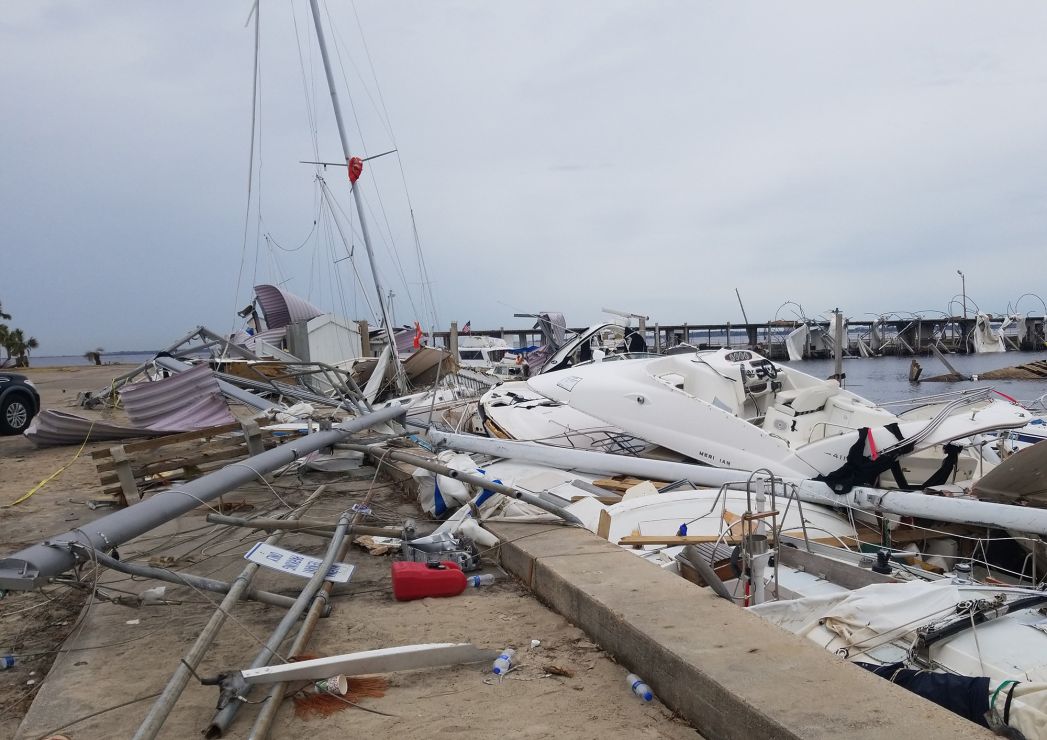
Spring storms on the lakes, hurricanes on the coast, a sandbar that wasn’t on the chart. Our damage calls usually start the morning after. What an owner does in the first day or two matters, both for the boat and for the claim.
Here’s the checklist we wish every owner had taped inside the console.
1. People first
Nobody boards a boat that’s partly sunk, burning, or sitting in a damaged slip until it’s safe. If there’s any chance of an electrical fault, shut off shore power at the dock pedestal, not on the boat. Faulty dock wiring can put current into the water around it, and that is a drowning risk for anyone who goes in.
If fuel or oil is in the water, you’re required to report it to the National Response Center at 1-800-424-8802. Tell your marina, too.
2. Call your insurance company
Most policies require prompt notice of a loss. Call, get a claim number, and write down who you spoke with. Ask two questions:
- What do they want you to do right now?
- Are they sending an adjuster or a surveyor, and when?
3. Document everything before you move anything
Your photos may be the only record of how things looked before cleanup started.
- Wide shots first: the boat, the slip or shoreline, neighboring boats, the dock
- Then close-ups of every area of damage
- The waterline, how the lines were tied, fender placement, the condition of cleats and pilings
- Video walking around and through the boat
- Screenshots of the weather forecast or storm warnings, if weather was involved
- Date and time for all of it
Don’t throw away damaged parts. A failed hose, a broken cleat, or a melted connector can show what caused the loss, and the cause often decides the claim.
4. Stop the damage from getting worse
Policies generally expect you to take reasonable steps to protect the boat from further damage, and they generally cover the reasonable cost of doing so. That might mean pumping out water, covering broken windows and hatches, doubling up lines, or getting the boat out of the water.
Keep every receipt.
What you should not do is start real repairs before the insurer has seen the damage or signed off. Emergency protection is expected. Rebuilding a damaged section before anyone has inspected it can complicate the claim.
5. If the engine went under, act fast
This is the step where time costs the most money. Corrosion inside an engine begins within hours of submersion, and it moves much faster in salt water. An engine that could have been saved often becomes a total loss because it sat for a week waiting on paperwork.
- Don’t try to start it. Water in the cylinders can bend a connecting rod.
- Get a qualified mechanic to pickle it: pull the plugs or injectors, drain the water, flush, and change the oil, often several times.
- Tell your insurer you’re arranging this. Don’t wait days for permission on something this time-sensitive.
The same urgency applies to electronics and the generator.
6. Raising a sunken boat is a job for a professional
Salvage done wrong can turn repairable damage into a total loss. Use an experienced salvage company, and check your policy, which may cover salvage and wreck removal. Don’t let a well-meaning neighbor hook a strap to the rail and start pulling.
What a damage survey does
A damage survey answers the questions the claim turns on:
- Cause. What happened, and in what order. This matters because policies treat a storm differently from wear, tear, and lack of maintenance.
- Extent. Everything that was damaged, including what isn’t visible from the dock.
- Repair scope and cost. What it will take to put the boat back in pre-loss condition.
- Repair or total loss. When repair costs approach the boat’s value, the insurer may declare it a total loss.
Your insurer will often send its own surveyor. You can also hire an independent surveyor to look out for your interests, which is worth considering when there’s disagreement about cause or about how much repair the boat needs.
Before the next storm
A little preparation now makes any future claim smoother:
- Photograph the whole boat, inside and out, while it’s in good shape.
- Keep receipts for electronics, canvas, and upgrades somewhere other than on the boat.
- Read your policy’s named storm or hurricane provisions. Some coastal policies require a written plan.
- Use extra lines and chafe gear, strip canvas and biminis, and confirm the bilge pumps and batteries are ready.
Need a damage survey for your claim?
Tell us what happened, where the boat is now, and who your insurer is.