
Sooner or later most owners get the letter: your insurance company wants a current condition and valuation survey before it will write or renew the policy. It usually comes with a change of carrier, a boat crossing a certain age, a jump in coverage, or simply the underwriter’s schedule.
It isn’t a pass/fail test, the way a lot of owners fear. The surveyor documents what’s there, notes anything that falls short of recognized standards, and puts a value on the boat. But the findings section is the first thing an underwriter reads, and much of what lands there is stuff an owner could have fixed in an afternoon.
Here’s how to get ready.
What an insurance survey is, and isn’t
A condition and valuation survey is narrower than a pre-purchase survey. We’re answering two questions for the underwriter: is this boat in reasonable, insurable condition, and what is it worth? We inspect the hull, deck, structure, and systems, check the safety equipment, run the engines where practical, and research comparable sales for the valuation.
What we generally don’t do is the extended sea trial and deep mechanical digging. That said, if we see a problem, it goes in the report.
Insurers differ on what they want. Some require the boat hauled out, some accept an in-water survey for certain boats, and some want a fresh survey every few years once a boat passes a certain age. Ask your agent before you book, so the survey you get is the one they’ll accept.
The week before
Gather the paperwork
- Title, state registration, or USCG documentation
- The hull identification number (HIN), and where it’s located on the boat
- Engine and generator serial numbers, if you have them
- Service records, especially recent engine work, repowers, new canvas, or new electronics
- Receipts for upgrades. Value follows documentation, and an upgrade you can’t show is hard to credit.
- The insurer’s survey request letter, if they sent one, so we can answer their specific questions
Check the safety gear
This is the most common source of findings and the easiest to fix.
- Fire extinguishers: the right number and type for your boat, mounted, with the gauge in the green. Check the date of manufacture stamped on the bottom of disposable extinguishers. Under the Coast Guard rule that took effect in April 2022, a disposable extinguisher has to come out of service 12 years after it was made.
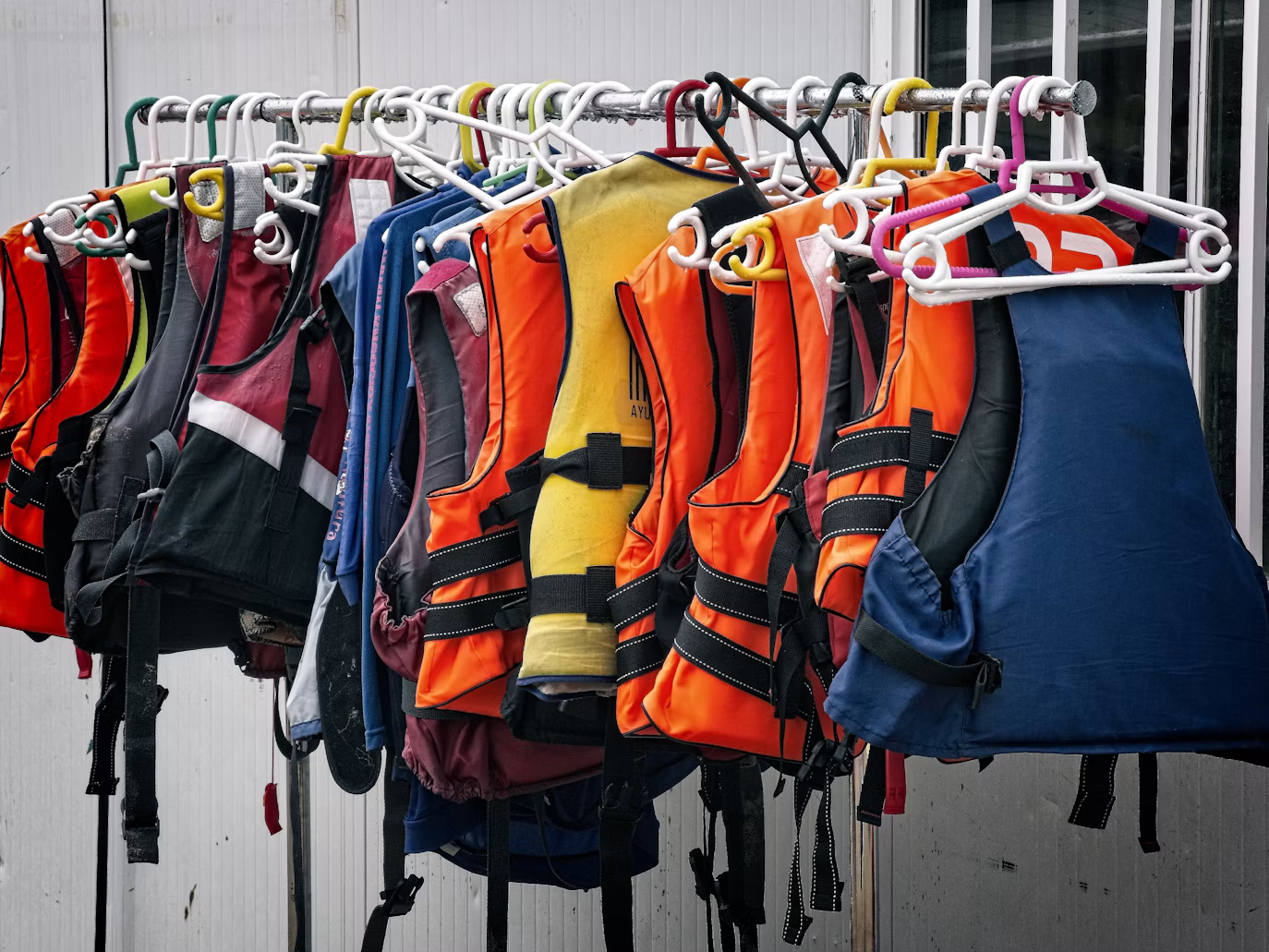
- Life jackets: one wearable, properly sized, USCG-approved life jacket for each person aboard, in good shape, plus a throwable device on boats 16 feet and over.
- Visual distress signals: required on coastal waters. Flares expire, so check the dates.
- Sound signal: a horn or whistle.
- Navigation lights: turn them all on and confirm every one works.
- Carbon monoxide detectors: if the boat has an enclosed cabin, make sure the detector works and hasn’t passed its replacement date.
- Bilge pumps: confirm they run in both manual and automatic, and that the high-water alarm works if you have one.
Make the boat accessible
- Empty the lockers, under-seat storage, and anything blocking the bilge, so we can see the hull, fuel tank, wiring, and through-hulls.
- Unlock everything and leave the keys.
- Unsnap or remove canvas so the deck hardware is visible.
- Charge the batteries. A dead battery means we can’t test the electrical systems or start the engines, and “unable to test” is a phrase underwriters don’t like to read.
- Leave fuel in the tank.
Fix the cheap stuff
These turn up on a lot of reports, and none of them cost much:
- Seacocks frozen open. Work every one of them.
- Single hose clamps on hoses below the waterline, where double clamps are the common recommendation
- Missing or rusted clamps on fuel fill, vent, and supply hoses
- Batteries that aren’t strapped down, or terminals without covers
- Loose or exposed wiring, household wire nuts, or electrical tape splices
- A shore power cord that’s cracked, spliced, or shows heat damage at the plug
- Any fuel smell in the bilge. Never ignore this one.
You don’t have to fix anything before the survey. Findings go in the report as recommendations, and most insurers give you time to address them. But clearing the easy items first means a cleaner report and fewer follow-ups with your agent.
On survey day
Be there if you can, or send someone who knows the boat. We’ll ask about its history, recent repairs, and how it’s used and stored. Honest answers help. A past grounding that was properly repaired is a non-issue. One we discover on our own raises questions.
Plan on a few hours, and longer for larger boats.
After the survey
You’ll get a written report with photos, findings ranked by priority, and our valuation. Send it to your agent. If there are recommendations, the insurer may ask you to confirm in writing, sometimes with photos or receipts, once they’re done.
Keep a copy with your boat records. It’s useful when you sell, and it’s useful if you ever have a claim.
Insurance renewal coming up?
Tell us about the boat, where it’s kept, and your renewal date, and we’ll get a condition and valuation survey on the schedule.